What Do Disconnected FOIA Systems Actually Cost?
When a records request moves through separate tools for intake, tracking, review, and release, the agency pays at every handoff. The cost shows up as requests that stall between systems, statutory deadlines that slip, and an audit trail that breaks the moment a file is emailed out for review.
This article looks at where those costs build up across a request's lifecycle and what changes when a request moves from intake to release in one connected platform.
Where the Costs Build Up
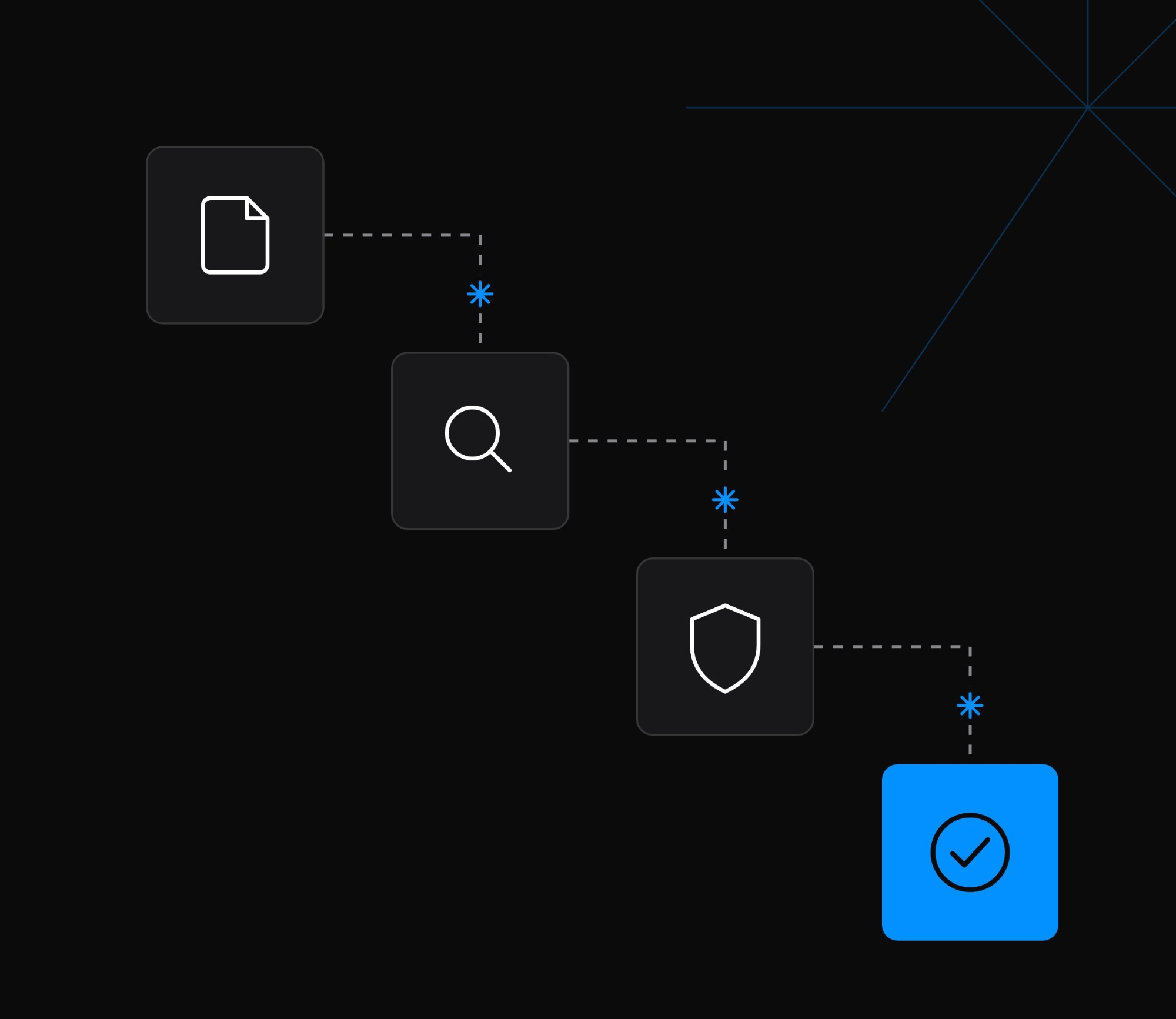
Each handoff between intake, tracking, review, and release tools adds delay, risk, and a gap the audit trail has to explain.
Intake to Tracking
Much of the back-and-forth in FOIA processing traces back to how a request arrived. Incomplete, unclear, or misdirected requests create work at every later stage, before an analyst can even start.
Tracking to Search and Review
Analysts often spend more time locating records than reviewing them, then lose more time moving results from a search tool into a separate review tool.
Review to Redaction
When documents leave the case for redaction in a separate tool, versions can drift and actions taken outside the case go undocumented. Emailing documents for review adds version conflicts, unattributed changes, and gaps in the record that surface during audits.
Redaction to Release
The last step in a records request is often the least controlled. Careful review and redaction can be undone by a single unsecured email attachment at the finish line.
Why It Matters More Now
Federal FOIA offices are losing staff while request volume and complexity climb. Recent Chief FOIA Officer reporting, covered by Federal News Network, shows the pattern [1]:
- Department of Transportation: The backlog grew from about 8,000 to 11,250 requests in a year, after an 11% rise in incoming requests and a 10% cut to FOIA staffing [1].
- Department of State: The backlog rose by roughly 6,000 cases, to 27,619 by the end of FY2025 [1].
- Department of Commerce: The backlog increased by more than 500 requests, to 1,968 in FY2025. The agency attributed it to request complexity, staff attrition, and inefficient search and review processes [1].
Commerce named inefficient search and review as a cause. When a team is shrinking, time lost moving work between systems is time not spent closing requests.
The same pressure applies beyond federal FOIA. State sunshine laws and local open-records rules create the same backlog dynamics, often with fewer resources to fix them. At the state and local level, the person deciding whether to release a record is often the same person short-staffed to process it.
What a Connected Request-to-Release Workflow Changes
In a connected workflow, the request, the records, the redactions, and the release all stay in one place. Nothing gets exported or emailed between steps. That's the idea behind Unified Case Management in Irys Case Manager (ICM): FOIA intake, eDiscovery, redaction, and a citizen-facing Public Portal in one platform.
In practice, that changes four things:
- Requests start complete. The Public Portal uses guided submission, automatic validation, and routing to the correct office, so analysts get complete requests they can start on immediately.
- Search hands off straight to review. Results move from search into review inside the case, with no export.
- Redaction happens inside the case. Documents never leave the secure platform, and case actions and redaction decisions are captured in one continuous timeline.
- Release is tracked. Packages go out through controlled channels, receipt is confirmed, and every past release is indexed and searchable.
With every action in one platform, the audit trail is captured as the work happens instead of being reconstructed from email threads afterward.
Security is part of this too. Every attachment sent for review is a copy outside the system of record. ICM is engineered on a strict Zero-Trust architecture with continuous data-layer verification, so sensitive agency data and public records stay isolated, audited, and protected.
Is Your Office Paying This Cost?
If these sound familiar, disconnected systems are likely adding time and risk to your requests:
- Requests often arrive incomplete or unclear, and analysts go back and forth with requesters before they can start.
- Search results are exported into a separate tool for review.
- Documents are emailed between reviewers or sent to a separate tool for redaction.
- Version conflicts come up during review.
- Deadlines and reports are reconciled at the end of a period instead of tracked as work happens.
- Requesters call for status updates because they can't see where their request stands.
- Release packages go out as email attachments.
Frequently Asked Questions
What Is a Disconnected FOIA System?
It's a setup where intake, tracking, search, review, redaction, and release run in separate tools, connected by manual steps and email. Each tool may work fine on its own. The cost comes from the handoffs between them.
How Do Disconnected Systems Affect FOIA Deadlines?
Federal law sets a 20-business-day statutory response window [2]. Every handoff between systems adds delay against that clock, and missed deadlines are one of the costs agencies pay when requests move between separate tools.
Why Does a Connected Workflow Help With Audits?
When every action happens in one platform, the system records who did what and when as the work happens. Redaction decisions, reviewer changes, and release history sit in one case timeline instead of being spread across inboxes and separate tools.
How Long Does It Take to Move Off a Legacy FOIA Platform?
With ICM, dedicated ingestion pipelines map, validate, and migrate legacy data within a 2-to-4-week deployment window.
Sources
- Justin Doubleday, Federal News Network, "Significant staff cuts drive rising FOIA backlogs," March 20, 2026.
- Freedom of Information Act, 5 U.S.C. § 552(a)(6)(A).